











How to Reduce Tool Runout in CNC Machining | MXP Solutions
Learn how to reduce tool runout in CNC machining using tool measurement systems and presetters. Improve accuracy, tool life, and stability with MXP.
A Practical Guide to Improve Accuracy, Tool Life, and Production Stability
Keywords: tool runout, reduce tool runout, CNC machining accuracy, tool presetter, tool measurement system, tool inspection machine
Introduction: Why Tool Runout Is Killing Your Machining Accuracy
Tool runout is one of the most underestimated problems in CNC machining.
Even a small runout can lead to:
- Poor machining accuracy
- Uneven cutting load
- Premature tool wear
- Surface finish defects
In precision machining:
Runout greater than 0.01 mm can already cause measurable deviation.
👉 If your process is unstable, runout is likely one of the root causes.
What Is Tool Runout?
Tool runout refers to the deviation between:
- The tool’s actual rotation axis
- The spindle’s ideal centerline
When runout exists:
- One cutting edge takes more load
- Cutting becomes unbalanced
- Vibration increases
👉 Result: inconsistent machining performance.
🔷 Visualizing Tool Runout


What Causes Tool Runout?
- Poor Tool Clamping
- Dirty tool holder interface
- Incorrect tightening torque
- Worn or damaged holders
👉 Even small contamination can create significant runout.
- Spindle Misalignment
- Bearing wear
- Machine aging
- Thermal deformation
👉 Often invisible, but highly impactful.
- Tool Geometry Issues
- Manufacturing tolerance deviation
- Tool wear or micro-chipping
- Regrinding errors
👉 A tool that looks normal may still be inaccurate.
- Lack of Measurement (The Hidden Cause)
Most factories still rely on:
- Visual inspection
- Operator experience
👉 But runout cannot be seen — it must be measured.
🔷 Real Problem in Production

How to Reduce Tool Runout in CNC Machining
To truly eliminate runout, you need a measurement-driven process.
- Measure Before Machining
The most effective way to control runout is to measure it before machining starts.
Using a professional tool measurement system such as MXP Jupiter:
- Detect runout (TIR) with micron-level accuracy
- Identify geometry deviations
- Prevent defective tools from entering production
👉 Result:
Only qualified tools are used.
- Use a High-Precision Tool Presetter
Tool setup is another major source of runout.
With the MXP RAM tool presetter:
- Tool length and diameter are measured automatically
- Alignment is corrected before machining
- Human error is eliminated
👉 Result:
Consistent and repeatable setup.
- Standardize the Tool Setup Process
Even with good equipment, process control matters.
Best practices include:
- Clean spindle and holder before installation
- Use consistent tightening torque
- Regularly inspect tool holders
- Implement SOPs for tool setup
👉 Result:
Reduced variability and improved stability.
- Monitor Tool Condition Regularly
Runout can increase due to wear over time.
- Inspect tools periodically
- Replace worn tools
- Track tool life
👉 Result:
Avoid unexpected machining failure.
Benefits of Reducing Tool Runout
✔ Better Surface Finish
Balanced cutting reduces vibration and improves quality.
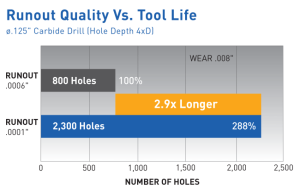
✔ Longer Tool Life
Even load distribution prevents early failure.
✔ Higher Machining Accuracy
Reduced deviation ensures tighter tolerances.
✔ Stable Production Process
Less downtime, fewer defects.
🔷 Before vs After Runout Control

Why Choose MXP for Tool Runout Control?
MXP focuses on practical and cost-effective solutions:
- MXP Jupiter→ Tool inspection & runout measurement
- MXP RAM→ Tool presetting
- Easy operation, fast integration
- Reliable performance at competitive cost
👉 Helping manufacturers move from:
Trial-and-error → Controlled machining
Conclusion: You Can’t Fix What You Don’t Measure
Tool runout is not a minor issue — it is a core factor in machining instability.
Without measurement:
👉 Runout is invisible
With MXP:
👉 Runout becomes controllable
About MXP
MXP provides tool measurement systems and CNC metrology solutions for global manufacturers, enabling higher precision, lower cost, and stable production.